
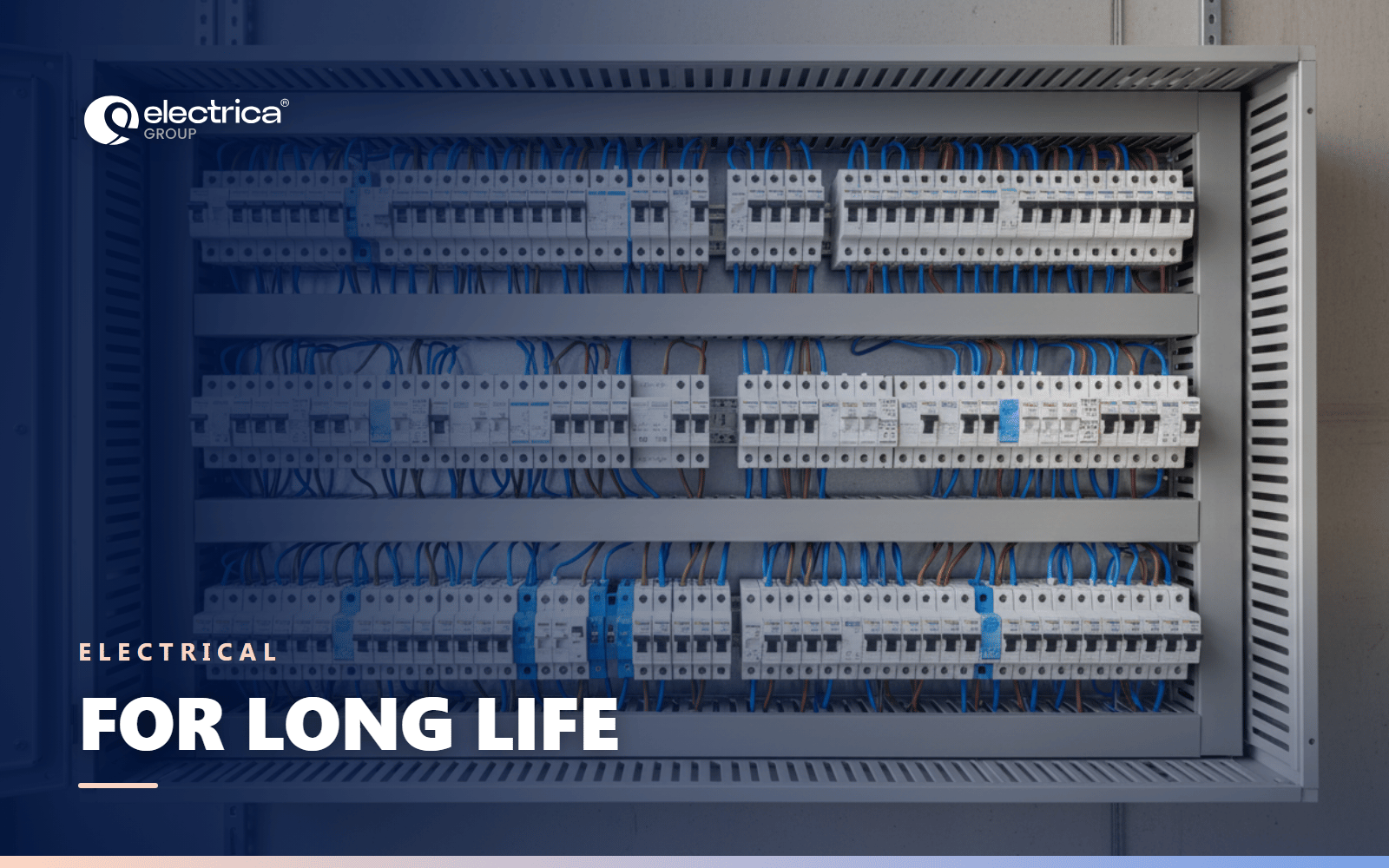
Breakers, RCDs and surge protection
What protects against what: a breaker's rating and curve, 30 mA versus 100 mA, voltage relays and SPDs.
Rating, curve, breaking capacity
A breaker carries three numbers and they must not be confused. C16 is the curve (C) and the rated current (16 A). The 6000 or 6 kA beside it is the breaking capacity: the largest short-circuit current the device will interrupt and survive.
The rating follows the cable, not the load you wish for. A 1.5 mm² cable takes roughly 16 A, 2.5 mm² roughly 25 A. A breaker larger than its cable is permission for that cable to overheat: it will not trip until the insulation runs. The other way round is safe — a C10 on 2.5 mm² simply limits the circuit sooner.
The curve says at what multiple of the rating the instantaneous element acts. B is 3–5 times, for lighting and sockets with ordinary appliances. C is 5–10, the general-purpose choice. D is 10–20, for motors, transformers and anything that draws many times its rating at start. A breaker that trips every time one particular appliance starts usually just has too fast a curve.
RCDs, RCBOs and selectivity
A breaker watches the current in a circuit; an RCD watches the difference between what went out and what came back. If some of the current leaves by another path — through a person, a damp wall, damaged insulation — the RCD sees it and opens the circuit.
Sensitivity follows the job. 30 mA protects people: it is the threshold below which the current has no time to become lethal, and 30 mA is what goes on sockets, bathrooms and outdoor circuits. 100 and 300 mA will not save anyone; they sit at the incoming supply as fire protection, catching a large leak in the insulation. Type matters too: AC sees only sinusoidal leakage, A also sees the pulsating DC that inverter air conditioners, washing machines and power supplies produce. Type A is today's default.
An RCBO is a breaker and an RCD in one housing: it saves width, but when it trips it does not say which of the two happened. Separate devices are easier to diagnose.
And the board's general rule is selectivity: the incoming device at least a step above the outgoing ones, so a fault on one circuit does not darken the whole house. The same with RCDs: 300 mA at the supply, 30 mA on the groups.
Voltage relays and SPDs
Neither a breaker nor an RCD protects against bad voltage. The breaker watches current, the RCD watches leakage; if 280 V arrives, both pass it on happily and it is the appliances that burn, not the device.
That is the voltage monitoring relay's job: it measures the voltage, drops the load when it leaves the set window, then restores it after a delay — so the fridge does not restart while the supply is still swinging. On a three-phase supply a phase-monitoring relay plays the same part, catching a lost phase, reversed phase order and asymmetry: the three things that burn motors out.
An SPD is about something else — not the level of the voltage but an impulse. A lightning or switching surge arrives in microseconds with an amplitude of kilovolts; a relay simply cannot keep up. The SPD clips the peak and diverts it to earth. It goes after the incoming breaker and demands a sound earth: without one there is nowhere for the surge to go.
A working minimum for a house: incoming breaker, SPD, voltage relay, a 300 mA RCD at the supply, then groups with their own breakers and 30 mA RCDs on sockets, outdoor circuits and wet rooms.
Other courses

Lighting basics
How to choose a luminaire by its light rather than its wattage: brightness, colour of light, protection from dust and water.
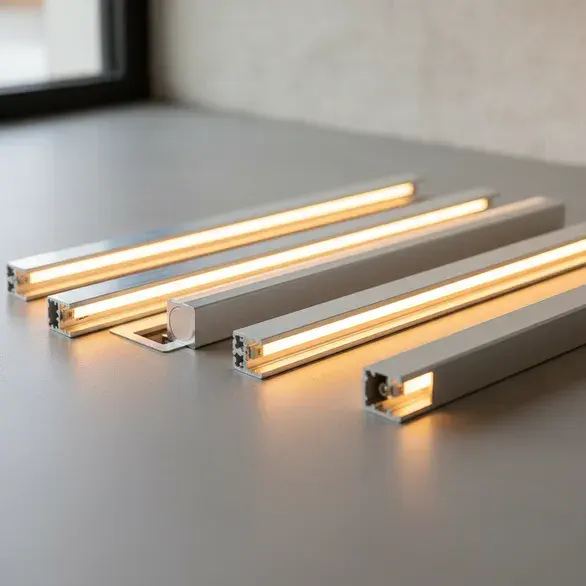
Types of LED luminaires
Recessed, surface, pendant, track, strips and outdoor floodlights — what goes where.
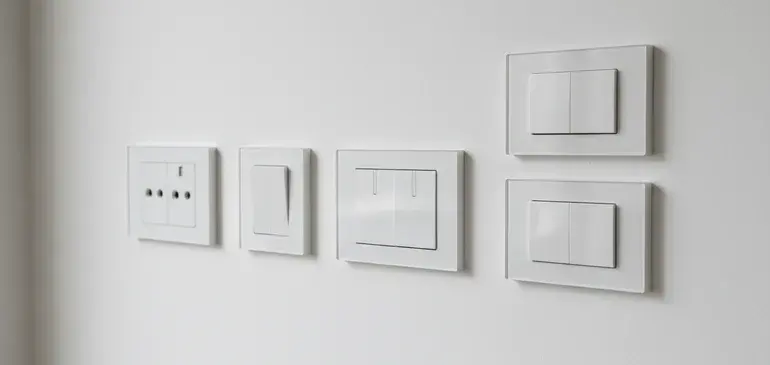
Sockets and switches
Ratings, earthing, two-way switches and dimmers, protection in wet zones.