Contactors and motor starters
The AC-1 and AC-3 categories, self-holding, interlocked reversing, star-delta, and modular contactors for lighting.
What a contactor is, and why it is not a breaker
A contactor switches a load on command — and nothing more. It does not protect: it does not track overload, does not count short circuits, will not open by itself if something goes wrong. The protection is always beside it: a breaker upstream for short circuits, a thermal relay downstream for overload. A motor starter is precisely that pairing sold as one assembly.
Why a contactor at all, if there is a breaker? Because a breaker is not built for tens of thousands of operations: its job is to act once, on a fault. A contactor is built to switch every day, and its contacts and coil live for millions of cycles.
Choose one by its utilisation category. AC-1 is resistive load: heating, incandescent lamps. AC-3 is the induction motor: the contacts are rated both for an inrush six to eight times the rating and for breaking an inductive circuit, which draws an arc. An AC-1 contactor on a motor will not last — the arc eats the contacts. So read a contactor's current from the line for your category, not from a headline power figure.
Self-holding, reversing, interlocking
The START button is pressed for a second, yet the motor must keep running. Self-holding does it: the contactor's own auxiliary NO contact is wired in parallel with START and, the moment the contactor pulls in, feeds its own coil. Release the button and the circuit is already made through that contact.
The STOP button breaks that circuit: wired in series, normally closed. The order matters — STOP always breaks the coil circuit rather than issuing a command. Then a broken wire in the STOP button stops the motor instead of leaving it unstoppable.
Reversing means two contactors on one winding with two phases swapped. An interlock between them is mandatory, and better doubled: electrical — each contactor's NC contact in the other's coil circuit — and mechanical, a factory link that physically prevents both from pulling in. Without it, closing both shorts two phases together: the board burns out instantly, long before the breaker acts.
Star-delta, and the modular contactor
On a direct start a large induction motor draws six to eight times its rating. On a weak supply everyone notices: the lights blink and nearby appliances stutter. A star-delta start cuts that inrush by roughly a third: the windings are first connected in star, the motor spins up, and after a few seconds the scheme switches to delta at full voltage. It costs three contactors and a time relay, and the changeover is set so the motor has time to reach speed without running in star under load any longer than needed.
The alternative is a soft starter or a variable-frequency drive; they cost more but also give speed control. Star-delta remains the cheapest answer where only starting matters.
Lighting is its own, very common case. A large group of LED fixtures draws a brief current many times its working value — every driver has a capacitor. An ordinary relay or switch burns on that load. A modular DIN-rail contactor is made for it: it takes the inrush, survives many cycles, and switches quietly — which is why it goes into flat boards, where the click would be heard.
Other courses
Lighting basics
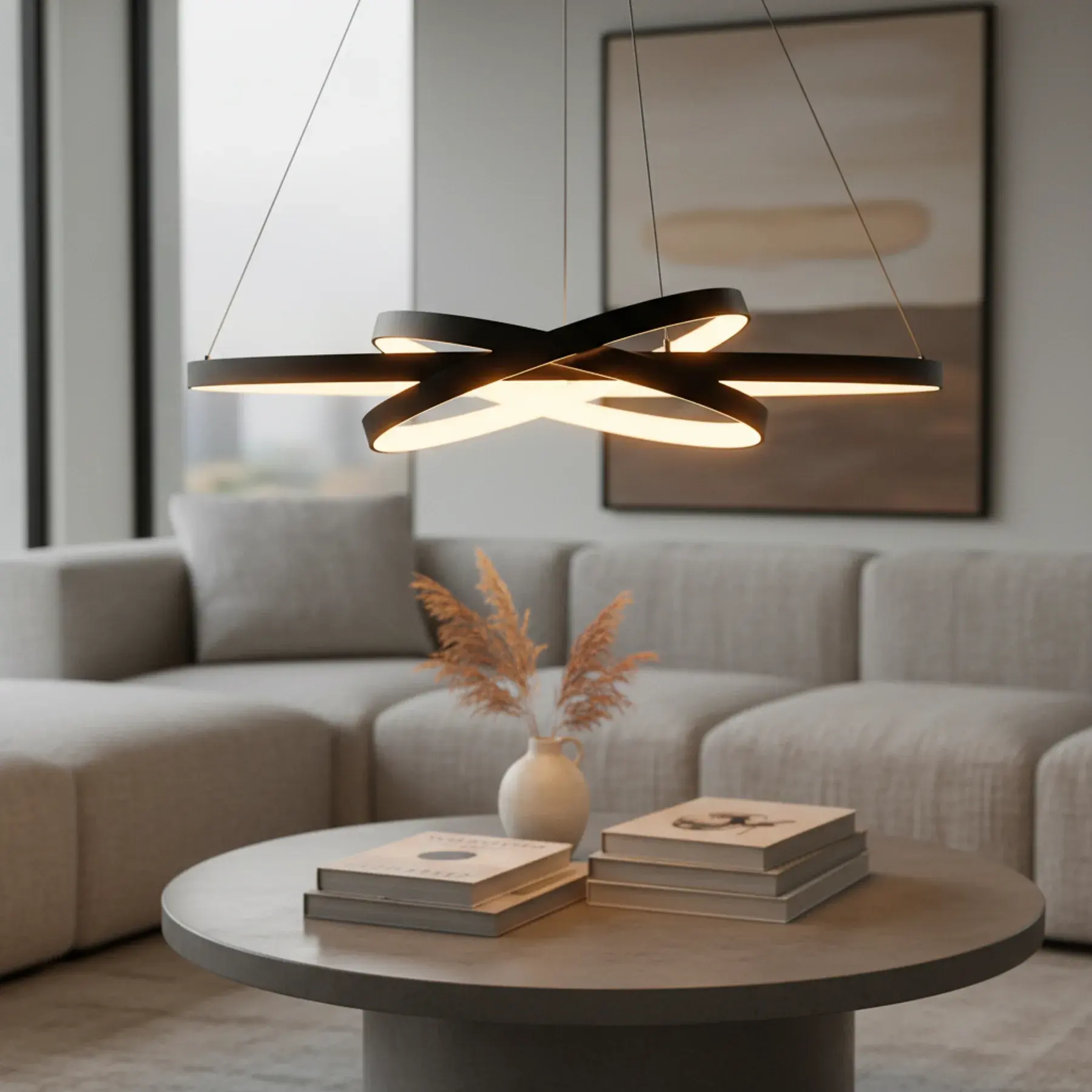
How to choose a luminaire by its light rather than its wattage: brightness, colour of light, protection from dust and water.
Types of LED luminaires
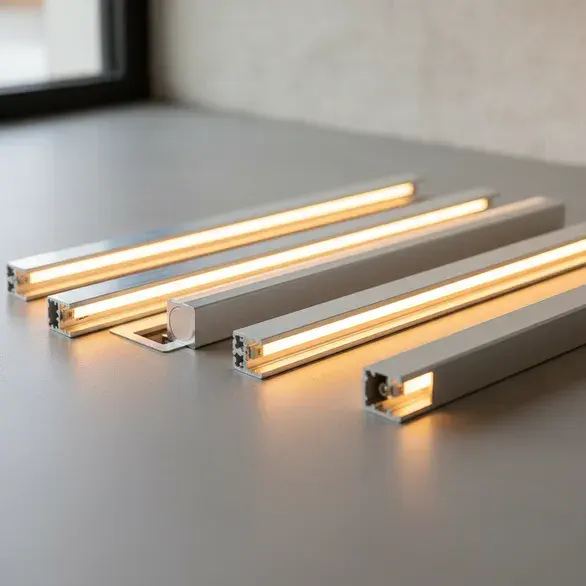
Recessed, surface, pendant, track, strips and outdoor floodlights — what goes where.
Sockets and switches
Ratings, earthing, two-way switches and dimmers, protection in wet zones.